Botox danger zones are specific facial areas where injections cause severe complications, such as unintended muscle paralysis and drooping eyelids. The botulinum toxin type A spreads beyond the intended injection site, leading to adverse side effects in 4 critical facial regions. Understanding the anatomical risks of neurotoxin injections prevents permanent facial asymmetries and functional impairments.
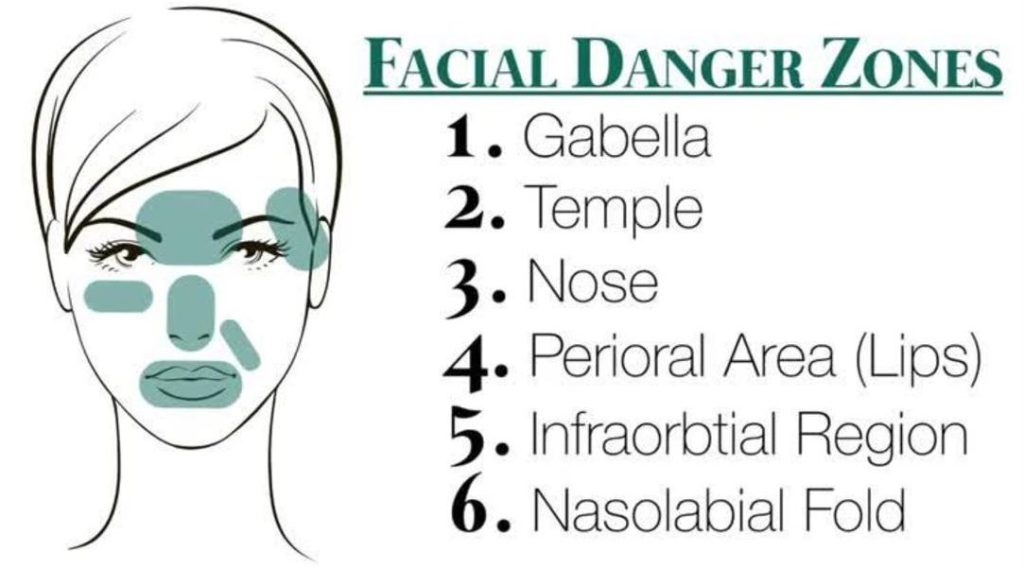
Table of Contents
What Are the 4 Danger Zones of Botox Injections?
The 4 danger zones of Botox injections include the forehead, the periocular region (around the eyes), the nasal area, and the perioral region (around the mouth). Injecting neurotoxins into these sensitive facial areas causes unintended muscle paralysis.
1. The Forehead: Preventing Brow Ptosis Injecting Botox directly above the eyebrows causes brow ptosis (drooping) or an unnatural “Spock brow” elevation. Board-certified dermatologists avoid this specific injection site to maintain natural facial expressions and prevent aesthetic complications.
2. The Eyes: Avoiding Vision Complications Botox injections around the delicate periocular area cause ocular problems, such as diplopia (double vision) and strabismus. Practitioners apply precise micro-doses to the orbicularis oculi muscle to prevent severe visual side effects.
3. The Nose: Preventing Respiratory Issues Administering Botox into the nasal musculature poses a severe risk of respiratory issues, including restricted airflow and difficulty breathing. Medical professionals avoid the nasalis muscle area during cosmetic treatments to ensure patient airway safety.
4. The Mouth: Safeguarding Motor Functions Botox injections in the perioral region interfere with essential motor functions, such as speaking clearly, chewing food, and drinking liquids. Injectors use highly conservative doses or avoid the orbicularis oris muscle entirely to minimize the risk of functional impairment.
3 Additional Risks of Botox Injections
Additional risks of Botox injections involve localized and systemic reactions, including allergic responses, bacterial infections, and severe injection-site bruising. Cosmetic dermatology patients experience these adverse effects due to improper injection techniques or individual physiological responses. Choosing a clinical environment ensures immediate medical intervention, if an adverse allergic reaction occurs.

How to Choose a Qualified Botox Provider
Choosing a qualified Botox provider requires verifying the practitioner’s medical credentials, assessing their clinical experience, and reading verified patient reviews. Select a board-certified dermatologist or plastic surgeon to minimize procedural risks, if you plan to undergo cosmetic neurotoxin treatments. Medical professionals possess an in-depth understanding of facial anatomy to safely navigate high-risk anatomical zones.
3 Tips for Minimizing Risks Before and After Botox Injections
Minimizing Botox risks involves avoiding alcohol consumption, abstaining from blood-thinning medications, and following strict post-procedure instructions. Implement these 3 protective measures to ensure optimal aesthetic outcomes:
- Avoid consuming alcoholic beverages for 24 hours prior to the treatment.
- Stop taking blood-thinning medications, such as aspirin and ibuprofen, to prevent bruising.
- Attend all scheduled follow-up appointments with your clinical provider to monitor tissue response.
Realistic Expectations for Botox Injection Results
Botox injections temporarily reduce dynamic wrinkles, but they do not completely erase deep static lines or reverse the chronological aging process. Clinical outcomes vary based on individual physiological factors, such as skin elasticity, muscle thickness, and chronological age. Establish achievable cosmetic goals with your medical provider before the procedure to ensure procedural satisfaction.